Insights
Ready-to-eat ramen eggs are marinated ajitsuke tamago supplied in product-specific storage formats. Some require refrigeration; only products with validated shelf-stable processing and packaging may be stored at ambient temperature. Confirm the exact specification, unopened shelf life and after-opening instructions before ordering.
Jinyi Food manufactures shelf-stable ramen eggs for foodservice operators, restaurant chains, distributors, and private-label brands worldwide, backed by a fully integrated egg supply chain of 8 farms and approximately 10 million laying hens.
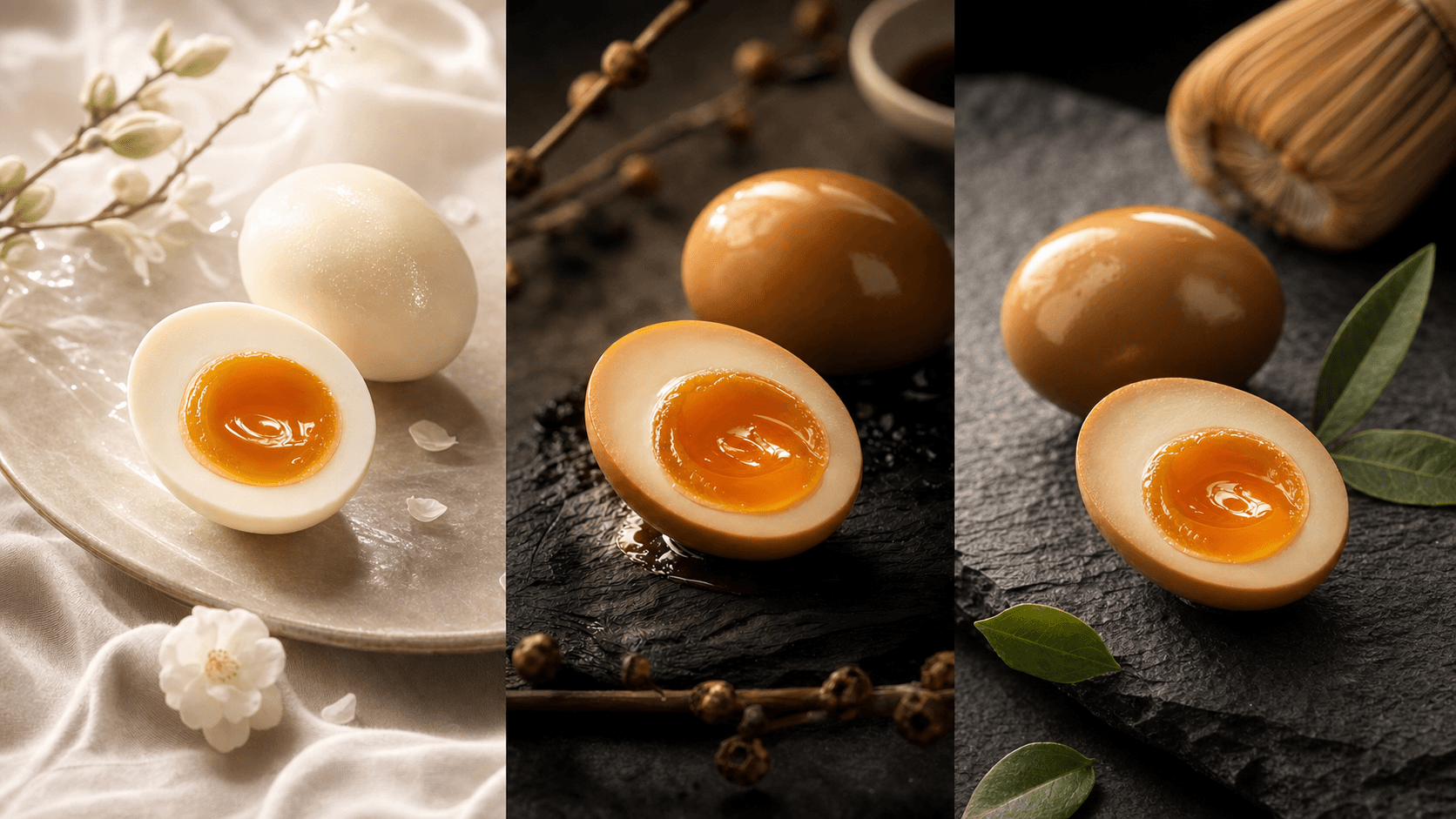
The Global Demand for Ramen Eggs
Ajitsuke tamago—the marinated, jammy-yolked ramen egg—has grown from a ramen-bowl topping into a global menu staple. It now appears on brunch plates, gourmet salads, poke bowls, and rice bowls across Asia, North America, and Europe. For foodservice operators, an authentic ramen egg lifts menu appeal and perceived value with minimal effort—if the supply chain is right.
Why In-House Ramen Egg Prep Doesn’t Scale
Traditional ajitsuke tamago is labor-intensive. A consistent semi-liquid yolk requires precise timing (typically 6–7 minutes), careful peeling, and an overnight soy-based marinade. At commercial volume, this creates three recurring problems:
Inconsistency — Yolk texture varies cook-to-cook and shift-to-shift.
Labor cost — Boiling, peeling, and marinating tie up valuable staff hours.
Waste — Peeling loss and over- or under-cooking reduce usable yield.
For multi-site operators and chains, these issues compound quickly and erode margin.
The Solution: Shelf-Stable, Ready-to-Eat Ramen Eggs
Jinyi Food is a full-chain egg product manufacturer. Our shelf-stable, ready-to-eat ramen eggs remove the complexity of in-house prep and deliver consistent, authentic ajitsuke tamago to commercial kitchens worldwide.
Prepared ramen eggs can reduce boiling, peeling and marinating work in a foodservice kitchen. Any reduction in cold-chain costs depends on the selected product: refrigerated eggs still require a maintained cold chain, while validated shelf-stable formats must follow their own approved storage instructions.
Choosing the Right Storage Format
Do not infer storage temperature or shelf life from a ready-to-eat label or a soft yolk. Request the approved specification and handling instructions for the exact product and pack size. When comparing formats, check:
Transport conditions — Refrigerated products need a maintained cold chain; use ambient transport only when the product specification explicitly permits it.
Storage capacity — Plan chilled, frozen or ambient space according to the selected product, not the category name.
Shelf life and waste — Confirm the unopened shelf life, date coding and after-opening limits for each pack format.
Application trials — Assess yolk texture, flavor and portion consistency using samples under your actual serving conditions.
Diverse Flavor Profiles for Global Palates
We go beyond traditional Japanese ajitsuke tamago, offering flavors tuned to different regional markets:
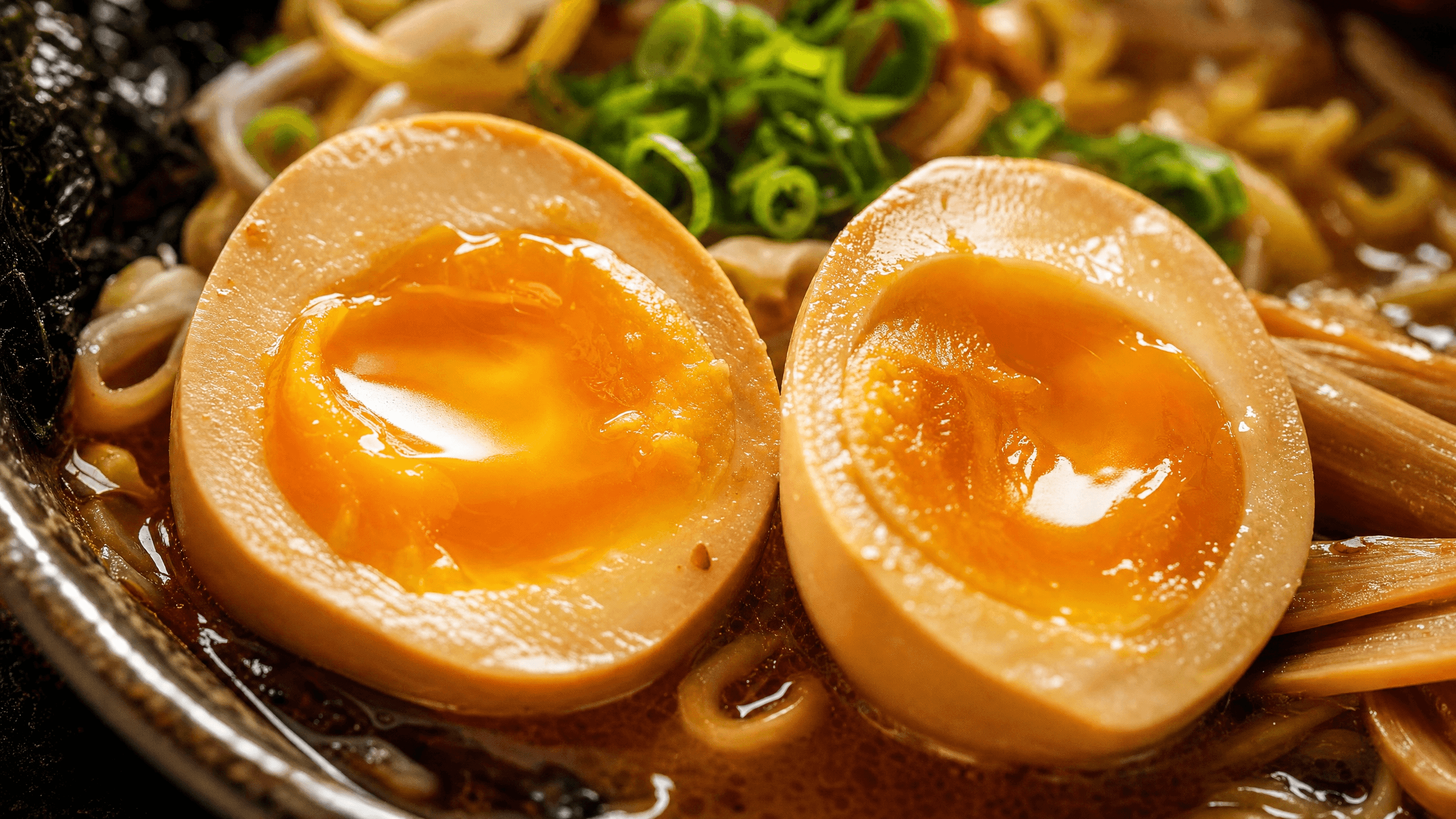
Classic Ramen Egg (Ajitsuke Tamago) — A traditional soft-boil with soy-mirin marinade. Ideal for authentic Japanese restaurants and premium ramen chains.
Asian Soy Sauce Ramen Egg — A sweeter, savorier profile balancing premium spices, rock sugar, and soy sauce. Suited to Chinese, Korean, and Southeast Asian cuisines, and pairs well with rice bowls and noodle soups.
We also provide OEM services for marinade and packaging, so you can create custom products aligned with your brand and local taste trends.
Who Should Source Shelf-Stable Ramen Eggs
Ramen Chains & Japanese Restaurants — Consistent, ready-to-serve ajitsuke tamago without labor overhead.
Convenience Stores & Meal-Kit Brands — A premium, long-shelf-life ingredient for ready-to-eat meals and snacks.
Foodservice Distributors — A flexible product line with simplified, cold-chain-free logistics for diverse client demands.
Quick Service Restaurants (QSRs) — Fast menu rollout and improved kitchen efficiency across multiple sites.
Why Partner with Jinyi Food
Jinyi Food is a full-chain egg supplier—from feed and farming to processing—operating 8 farms with approximately 10 million laying hens. This vertical integration gives our partners:
Stable, year-round supply at scale
Food safety and traceability records for the selected product and production site
Consistent quality batch after batch
Explore the full specifications of our classic ramen egg and Asian soy sauce ramen egg, or contact our team to request samples, wholesale pricing, and OEM marinade or packaging options for your foodservice program.
FAQ
How long do shelf-stable ramen eggs last?
Shelf life differs by product and pack. Follow the exact product’s approved specification and label, including limits after opening. Some ramen egg formats require refrigeration; do not apply an ambient shelf-life claim to the whole range.
Are shelf-stable ramen eggs safe without refrigeration?
Use ambient storage only when the exact product’s approved specification permits it. Follow temperature, packaging-integrity and post-opening instructions. Ready-to-eat status, a jammy yolk or vacuum packaging alone does not establish shelf stability or safety.
What flavors of ramen eggs does Jinyi Food offer?
Two standard profiles: the classic Japanese Ajitsuke Tamago with a soy-mirin marinade, and an Asian soy sauce ramen egg with a sweeter, savorier profile. Custom marinades and packaging are available through OEM services.
Who are shelf-stable ramen eggs suitable for?
Ramen chains and Japanese restaurants, convenience stores and meal-kit brands, foodservice distributors, and quick service restaurants that need consistent quality without in-house prep labor.
Does Jinyi Food supply ramen eggs in bulk for B2B buyers?
Yes. As a full-chain egg product manufacturer operating 8 farms with approximately 10 million laying hens, Jinyi Food supplies ready-to-eat ramen eggs in wholesale quantities with OEM/ODM support for global foodservice partners.
