Trends
Quick Answer
In brief: High-protein innovation in 2026 is moving beyond shakes and sports bars into familiar comfort foods, including pasta, savory snacks, bakery, breakfast, coffee, and frozen meals. The opportunity for food brands is not simply to add more protein. It is to protect the taste, texture, and emotional familiarity consumers expect while delivering a meaningful, legally supportable nutrition proposition. |
Key Takeaways for Brands and Manufacturers
Familiarity lowers the barrier to trial. Consumers understand a protein-forward version of a food they already know more quickly than an entirely new functional format.
Taste and texture remain the gatekeepers. Dryness, chalkiness, eggy notes, toughness, or weak aroma can erase the value of a higher protein number.
Different protein ingredients do different jobs. Egg white powder, whole egg powder, yolk ingredients, and finished egg products should not be treated as interchangeable.
Define the nutrition claim before finalizing the formula, then verify it through finished-product testing and the rules of each destination market.
Develop the complete product system—flavor, moisture, fat, structure, processing, and packaging—rather than optimizing protein in isolation.
Why Protein Is Entering Comfort Food
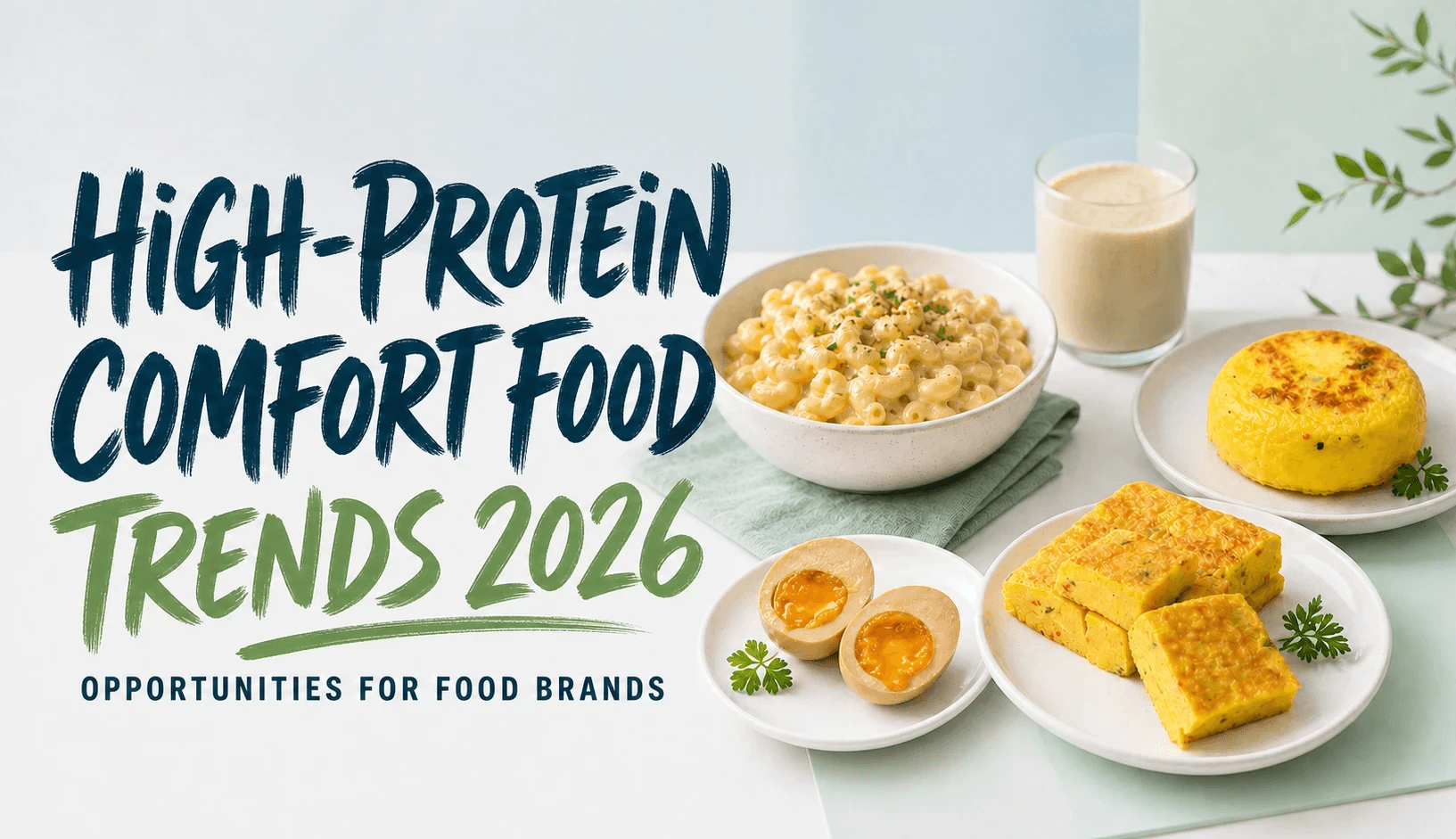
Protein has become an everyday shopping cue rather than a message limited to athletic nutrition. In 2026, major brands have introduced protein-forward versions of macaroni and cheese, chips, cereal, bakery products, coffee and frozen foods. The strategic logic is simple: consumers do not have to give up a familiar pleasure in order to choose a more functional option.
The shift is also connected to convenience. Traditional meal boundaries are becoming less rigid, and consumers increasingly use snacks, breakfast foods and beverages to cover multiple eating occasions. A product that combines familiarity, portion control and protein can fit breakfast, desk eating, afternoon snacking or a quick meal.
However, the trend also creates a quality risk. Protein is not automatically a reason to buy if the product feels dry, dense, powdery or overly processed. Industry reporting in 2026 has repeatedly emphasized that functional snacks must still deliver clean flavor, credible sourcing and a satisfying sensory experience.
What Counts as High-Protein Comfort Food?
High-protein comfort food is a familiar, emotionally reassuring product redesigned to deliver more protein without losing its core sensory identity. It may be naturally protein-rich, reformulated with a protein ingredient, or built around an egg-based component. Any protein claim must be supported by the finished product and comply with the rules of the destination market; it should never rely on ingredient assumptions alone.
Five Product Platforms with Opportunity
1. Pasta, Noodles and Creamy Meals
Macaroni and cheese, noodles and creamy bowls offer a strong comfort cue and familiar flavor architecture. Protein can come from the pasta, sauce, cheese, egg ingredients or a combined system. The technical risk is concentrated texture: too much protein can increase firmness, dryness or sauce thickening after cooling and reheating.
2. Savory Snacks and Crackers
Protein chips, popped snacks, crackers and baked bites bring function into an established snacking occasion. Egg white ingredients can contribute protein and structure in selected formulations, but water activity, expansion, crispness, browning and flavor carry must be tested. A higher protein claim will not compensate for a stale or hard bite.
3. Breakfast and All-Day Egg Formats
Egg bites, omelets, breakfast sandwiches, egg patties and prepared scrambled eggs offer a direct, recognizable protein story. They can also support portion control and fast service in frozen retail, hotels, cafes and convenience stores. The main buying criteria are texture after reheating, portion consistency, freezer stability, preparation time and packaging fit.
4. Bakery and Sweet Comfort
Muffins, pancakes, waffles, cookies and dessert-style products can use familiar flavors to make protein more approachable. Egg ingredients may support aeration, binding, color and structure as well as protein content. The formulation challenge is moisture: protein can reduce tenderness, so fat, sugar, starch, water and mixing conditions must be rebalanced.
5. Coffee, Beverages and Soft Desserts
Protein coffee and dessert-inspired drinks use a known flavor as the entry point. Egg white protein powder may be considered where a dairy-free protein ingredient is required, but the final product still contains egg allergen and must be evaluated for flavor, heat stability, foam behavior, sedimentation and regulatory labeling. ‘Dairy-free’ should only be used after reviewing the full formula and local rules.
How Egg Ingredients Can Support Development
Egg White Protein Powder
Primary role: protein contribution, foaming, heat-set structure, and binding in selected applications. Best-fit questions: flavor, solubility, heat stability, foam, texture, allergen control, and finished-product nutrition.
Whole Egg Powder
Primary role: balanced egg functionality across structure, binding, color, emulsification, and flavor. Best-fit questions: reconstitution, moisture balance, process tolerance, and whether the protein concentration meets the target.
Egg Yolk Powder or Liquid Yolk
Primary role: emulsification, richness, color, and creamy mouthfeel. Best-fit questions: oil–water balance, process stability, flavor, color, and cold-chain or storage needs.
Frozen or Ready-to-Heat Egg Products
Primary role: a recognizable whole-food format with fast preparation. Best-fit questions: portion control, reheated texture, packaging, logistics, shelf life, and channel economics.
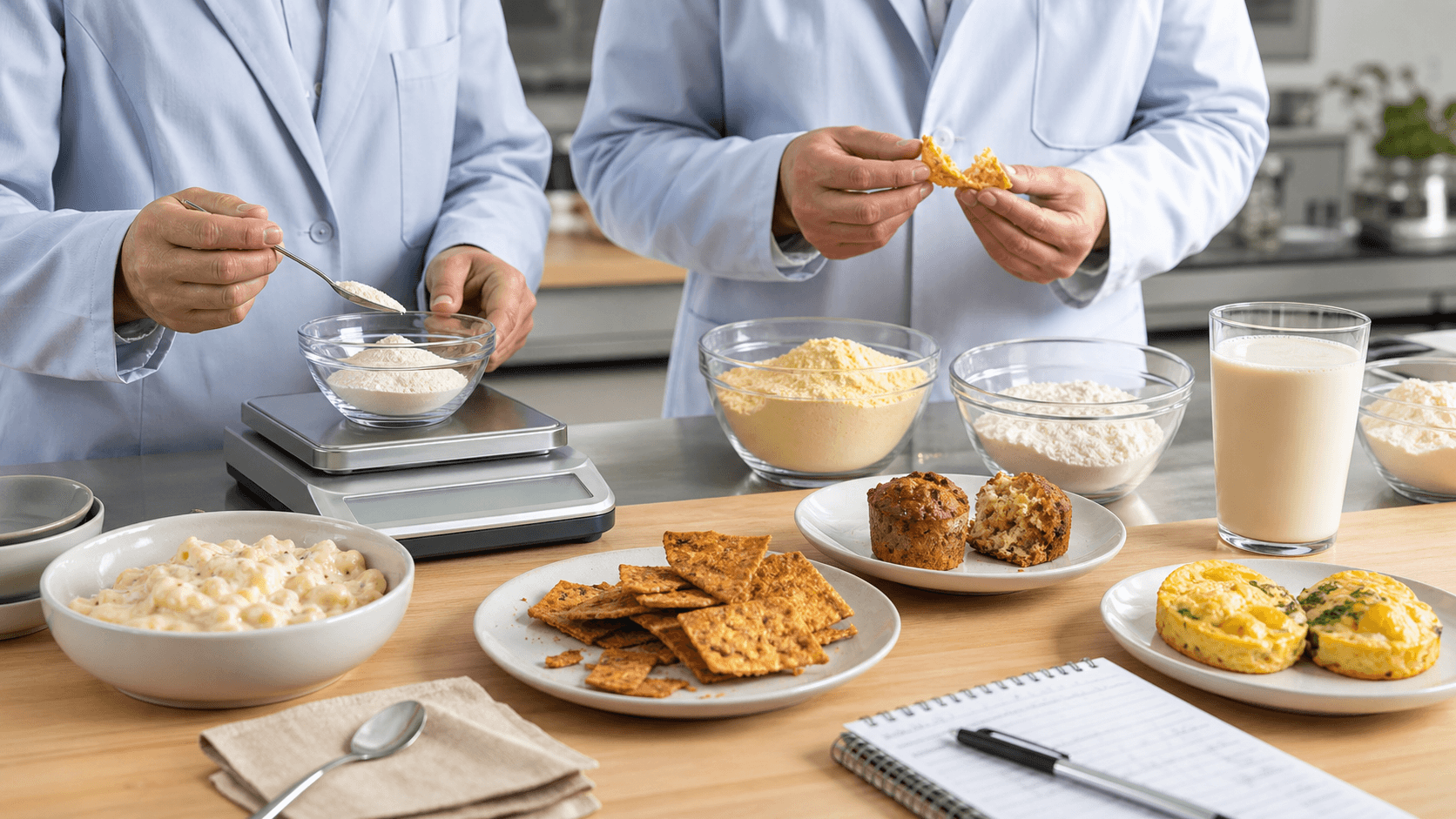
Ingredient choice should begin with the product’s sensory and processing needs. Egg yolk is not primarily a protein-fortification ingredient, but it may help a protein-forward product feel creamier and more indulgent. Egg white powder can increase protein more efficiently, yet excessive use may increase firmness or dryness. Whole egg powder offers broader functionality but a different protein-to-fat balance. The best system may use more than one egg ingredient or combine egg with dairy, plant or other proteins.
The Five Formulation Problems That Decide Repeat Purchase
1. Dryness and Toughness
Protein ingredients bind water and change structure. In bakery, snacks and prepared foods, an increase in protein can reduce tenderness or create a hard bite. Measure moisture, water activity and texture over the full shelf life, not only on production day.
2. Powdery or Eggy Flavor
Neutrality should be evaluated in the real food matrix. Heat, fat, sweetness, acidity and storage can reveal flavors that are not obvious in a simple water test. Sensory panels should compare the protein-forward sample with the original benchmark.
3. Poor Solubility or Sedimentation
Beverages and sauces require attention to dispersion, hydration sequence, temperature, shear and holding time. A formula that looks smooth immediately after mixing may sediment or thicken later.
4. A Claim the Product Cannot Support
Protein claims differ by market and are based on the finished food, serving, energy contribution and local labeling rules. Calculate the target early, then confirm it with laboratory analysis and regulatory review before printing packaging or publishing marketing copy.
5. Cost Without Consumer Value
Protein ingredients can raise formula cost and create new process requirements. The commercial question is not the cost per kilogram of the ingredient. It is the cost per sellable serving after yield, waste, packaging, processing, claims and expected price position are considered.
A Practical Development Workflow
Define the consumer and occasion: breakfast, snack, meal replacement, family comfort food, or foodservice add-on.
Set the finished-product nutrition target and identify the claim rules for each market.
Choose a familiar sensory benchmark and define what must remain unchanged.
Screen protein systems for taste, texture, process fit, and cost before selecting a single ingredient.
Run process and shelf-life trials in the final package, including reheating or preparation instructions.
Confirm nutrition, allergen, microbiological, and labeling data on the commercial formula.
Scale gradually and maintain an approved sensory standard for ongoing batch comparison.
What Food Brands Should Ask a Supplier
Which egg ingredient is recommended for our product target, and what functional data supports that recommendation?
Can you provide microbiological, allergen, nutrition, and technical specifications for the proposed SKU?
How should the ingredient be hydrated, mixed, and processed?
Can samples be tested in our actual recipe and process rather than in a generic model system?
Which certifications and export documents apply to the exact site and product?
What are the packaging options, MOQ, lead time, storage conditions, and change-control process?
How Jinyi Food Can Support Protein-Forward Projects
Jinyi Food’s public portfolio includes egg white, whole egg and yolk powders, pasteurized liquid egg, frozen egg products, ambient egg products and ready-to-eat formats. This allows a brand to evaluate both ingredient-led and finished-product routes. The right route depends on the buyer’s process capability, cold-chain access, packaging plan and destination market.
For an ingredient project, share the protein target, base recipe, benchmark texture, process conditions and annual volume. For a finished-product project, add portion size, reheat method, packaging, shelf-life target and channel. Final claims and performance should be based on the approved commercial formula and product testing.
Frequently Asked Questions
Why are high-protein comfort foods growing in 2026?
High-protein comfort foods combine a familiar eating experience with an established protein cue. Because shoppers already understand the base product, brands can offer added function without asking consumers to adopt a specialist sports-nutrition format.
Which egg ingredient has the most protein?
Egg white powder is generally the most protein-concentrated egg ingredient, although the exact composition varies by specification. Buyers should confirm the current supplier data sheet and validate nutrition in the finished product.
Can egg white protein replace whey protein?
Egg white protein can replace part or all of whey in some formulations, but it is not a universal one-to-one substitute. Teams must test solubility, flavor, heat response, foaming, texture, cost, nutrition, and allergen labeling in the final product.
Is egg white protein dairy-free?
Egg white is not a dairy ingredient, but it is a major egg allergen. Whether a finished product can carry a dairy-free claim depends on the full formula, shared equipment, cross-contact controls, and local labeling rules.
What is the biggest technical risk?
The biggest risk is losing the eating quality that made the original product appealing. Dryness, toughness, chalkiness, off-flavor, sedimentation, or poor reheating can reduce repeat purchase even when the protein claim is attractive.
Can Jinyi Food support OEM high-protein products?
Yes. Jinyi Food offers egg ingredients, frozen and ambient egg products, and OEM capabilities. Feasibility, formulation, packaging, claims, MOQ, and destination-market requirements should be confirmed for each project.
Start a Protein-Forward Product Brief
Developing a protein-forward product? Share your protein target, benchmark, application, process and destination market with Jinyi Food to discuss egg ingredients, samples or an OEM product-development route. |
Related Reading
Egg White Protein Powder for Coffee: 2026 Proffee Guide
High-Protein Breakfast: Why Egg Bites Are Winning Foodservice Menus
Why GLP-1 Users Are Driving Demand for Egg Protein in 2026
The Applications of Egg Powder in Modern Food Manufacturing
Sources and Further Reading
Axios - Protein Invades the Comfort-Food Aisle
AP - High-Protein Demand and Whey Supply Pressure
National Restaurant Association - What’s Hot in 2026