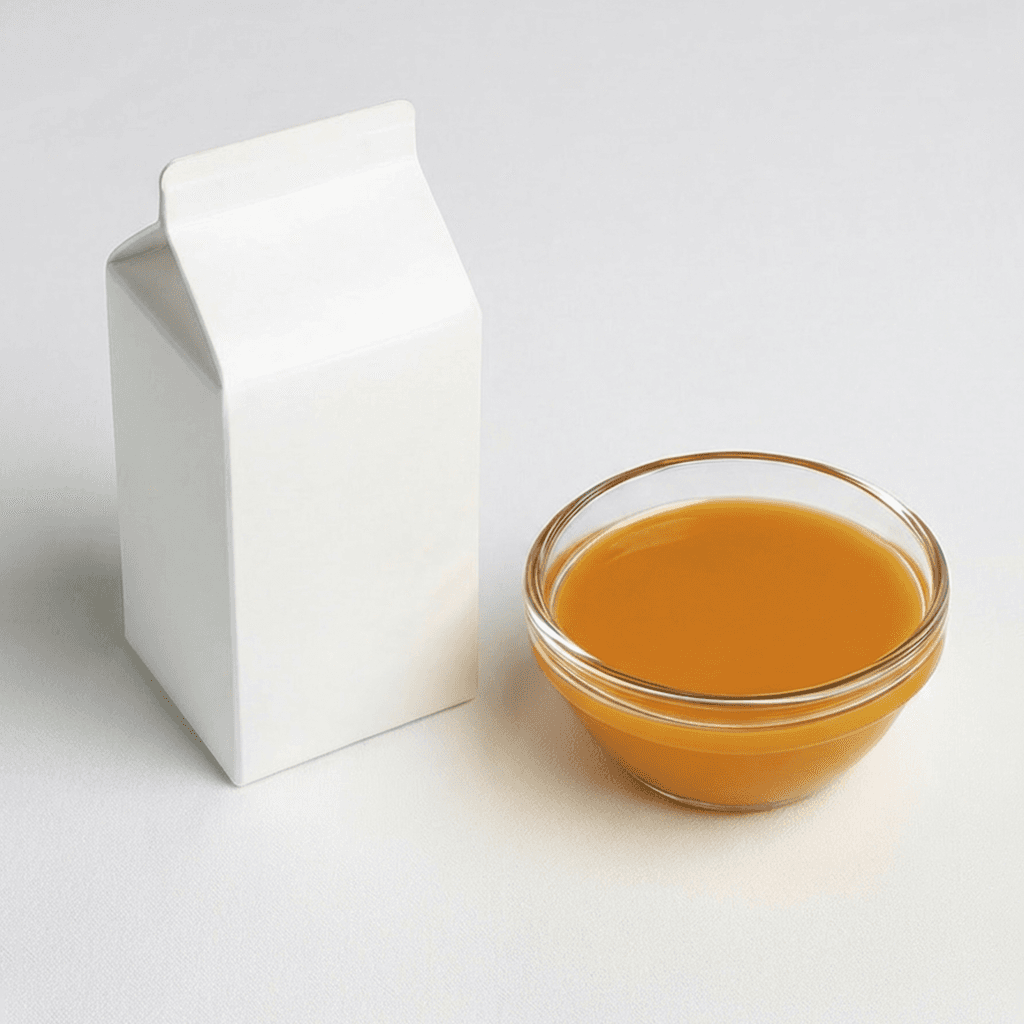
Pasteurized Whole Egg Liquid
Storage, Shelf Life & Handling
Packaging & Specifications
Product Description
Applications
Instructions for Use
Check All Products
Why Industrial Bakers Switch from Shell Eggs to Whole Egg Liquid
Cracking shell eggs on a production line hides three costs that rarely show up on a price sheet: labor time per 1,000 eggs, shell waste disposal, and unavoidable defect rates from spoiled or blood-spotted eggs. For a mid-sized bakery cracking 20,000 eggs a week, this can mean 15–20% hidden loss compared to ready-to-pour liquid.
Pasteurized whole egg liquid removes all of it. One 10 kg carton replaces roughly 200 large shell eggs, pours directly into mixers, and arrives with zero shell fragments, zero cracking labor, and zero pathogen risk. Recipe yield becomes predictable batch after batch — the quiet advantage that turns chaotic shell-egg kitchens into smooth industrial lines.
Whole Egg vs. Yolk vs. White — Which Pasteurized Format Do You Need?
Need | Best choice | Why |
|---|---|---|
General baking, cakes, custard, muffins | Whole Egg Liquid | Natural yolk-to-white ratio, matches most classic recipes |
Mayonnaise, rich sauces, ice cream | Yolk Liquid | Higher emulsification and color |
Meringues, macarons, protein drinks, cocktails | White Liquid | Foaming and gelling, fat-free, cholesterol-free |
Whole egg liquid is the most versatile format — suitable for any recipe that originally calls for “whole eggs” without reformulation.
Fresh-Egg-to-Liquid Conversion Reference
Fresh egg equivalent | Whole egg liquid |
|---|---|
1 large egg (~50 g edible portion) | 50 g liquid |
10 eggs | 500 g liquid |
1 carton (10 kg) | ~200 large eggs |
Ratios may vary slightly by recipe and regional egg size standards. For large-scale production, our technical team provides precise formulation conversion on request.
Why Manufacturers Rely on Jinyi Pasteurized Whole Egg Liquid
As the most versatile liquid egg format, whole egg liquid drops into existing recipes with no reformulation — and the chilled version adds day-to-day operational advantages:
Drop-in replacement for shell eggs — natural yolk-to-white ratio means recipes calling for whole eggs work 1:1 by weight, from cakes to egg wash.
Audit-friendly pasteurization — controlled heat treatment significantly reduces microbiological risk versus in-house egg breaking, simplifying HACCP documentation.
Faster line throughput — one chilled 10 kg carton replaces roughly 200 shell eggs with no cracking, separating, or thawing steps.
Cleaner operations — eliminates shell waste and cross-contamination points in the production area, reducing cleaning time and disposal cost.
How Different Industries Use Pasteurized Whole Egg Liquid
Industrial & Artisan Bakery
Cakes, muffins, sponge bases, cookies, and egg wash — dosed by weight for uniform structure, color, and moisture across every batch.
Foodservice & Central Kitchens
Scrambled eggs, omelets, French toast, and breakfast programs at hotels and restaurant chains — consistent quality with far less morning prep labor.
Convenience & Prepared Foods
Ready meals, egg patties, sandwiches, and noodle products where a stable, pumpable egg ingredient integrates directly into automated processing lines.
Related Egg Products
If your storage conditions or recipe functionality differ, these Jinyi formats are worth comparing:
Frozen Whole Egg Liquid — 24-month frozen storage for export shipments and seasonal demand buffering.
Whole Egg Powder — ambient-stable powder for dry mixes and markets without cold-chain coverage.
Pasteurized Egg White Liquid — foaming and gelling performance for meringues and high-protein foods.
Pasteurized Egg Yolk Liquid — concentrated emulsifying power for mayonnaise, custards, and ice cream.
CONTACT US
Contact Our Product Consultant
*Bulk Supply Only | No Retail or Small-Quantity Orders
*Fresh eggs are not our primary offering and require destination country regulatory clearance.
