Articles
Key Takeaways
Processed egg ingredients — liquid, powder, frozen and UHT — remove the labor, food-safety and variability costs of shell eggs at industrial scale
Manufacturers now buy functionality — emulsification, foaming, binding, protein fortification — not just eggs
Long shelf life makes processed formats an insurance policy against supply shocks like avian influenza
Vertically integrated suppliers can answer traceability and carbon-footprint requests in days, not months
Shell Eggs and Engineered Ingredients
Shell eggs are still used. They are indispensable in small bakeries and kitchens.
The math for large-scale food production is different. You can’t afford to have shell eggs that are variable when you’re producing 40,000 units a shift. The cracking labor is expensive, there’s a Salmonella risk involved, they need to be refrigerated, and 15% of them arrive damaged or not up-to-spec.
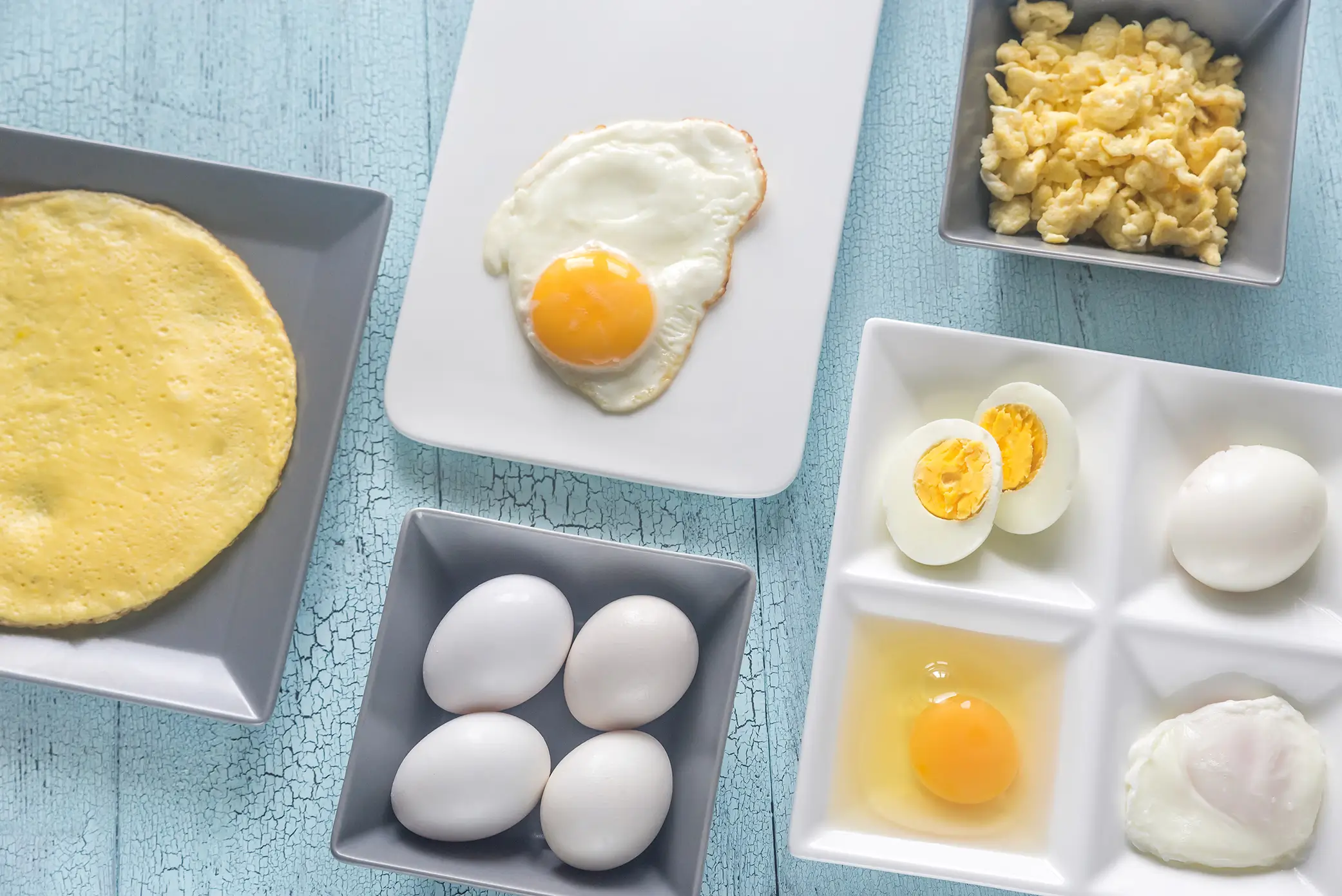
These problems can be solved in four different ways by using processed egg products:
Pasteurized liquid egg -- whole yolk or white in 10kg bags
Spray-dried egg powders -- 12-month shelf life, ambient storage
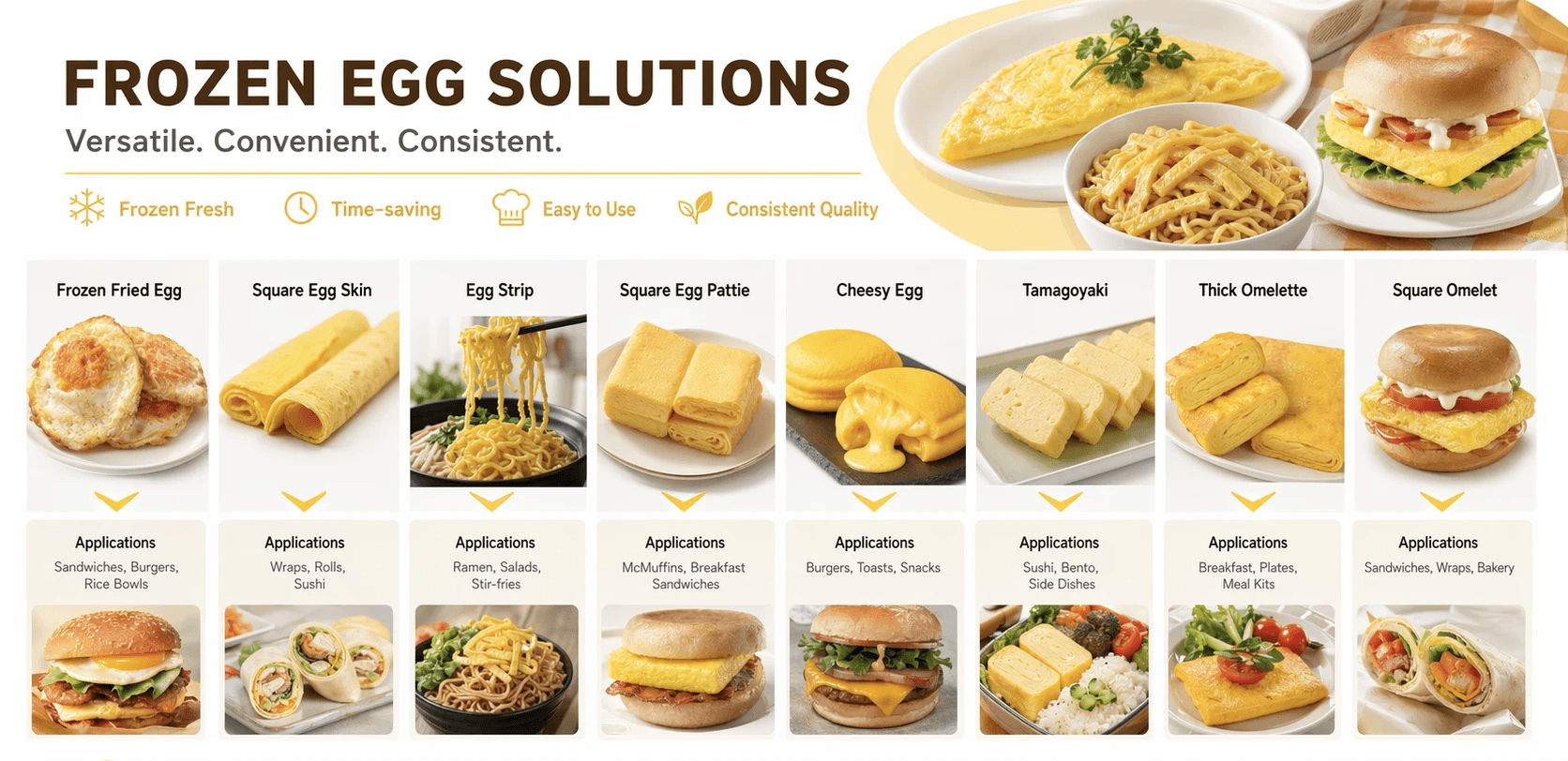
Frozen Egg Products -- Often used for high-fat egg yolk applications such as mayonnaise
Shelf stable UHT eggs - a new format that is growing rapidly in the Middle East, Southeast Asia and Africa
These formats are not a luxury for a QSR chain that buys egg products for 800 locations or a 24/7 sauce plant. These formats are a necessity for operations.
The real product you’re buying is the one that has functionality.
In the past five years, I have seen a change in manufacturers’ buying habits: they no longer buy eggs. They are buying features.
My first question when a customer tells me, “I need an egg powder” is: “What will it do in your formula?”
The same raw material, eggs, can be transformed into a variety of ingredients.
Emulsification Power For Mayonnaise, Aioli and Creamy Dressings
Aeration and foaming for macarons, sponge cakes and mousses
Binding Strength for Meatballs, Nuggets and Fish Cakes
Richness in color of fresh noodles and Asian Sauces
Fortification of foods with protein in sports nutrition and medical food
On the shelf, a standard whole egg powder looks almost identical to a modified high foaming egg white powder. One recipe for macarons produces 520ml of foam, while the other barely gets to 380ml. This 37% difference can mean the difference between a successful product launch and one that fails.
The global market for processed eggs is growing faster than the population and general food production. Functionality sells.
The High-Protein demand is adding fuel to the fire
In 2026, walk through any supermarket in North America, Europe or urban Asia. Count products that have “high protein” on the front or a gram number.
Observe how many of them contain egg proteins.
The human body is able to use egg protein with a near-100 percent efficiency. Its PDCAAS score of 1.0 is higher than whey or soy protein. Egg powder is the best solution for formulators who want to label their products with “20g of protein”.
What is driving manufacturers to egg powder?
Egg white powder contains 85-87% of protein
12+ months shelf life at ambient temperature
Neutral taste doesn’t clash with other ingredients
Low allergen concerns in comparison with dairy products
Drop-in compatible with Dry Blend Operations
we have worked on projects in which egg white powder was used to replace 30-40% of the whey proteins in ready-to mix beverages. This reduced formulation costs by 18%, while maintaining the label claims.
The Underrated Advantage of Supply Stability
Most procurement conversations begin with price. Few of them end there.
Avian influenza hit the United States in multiple waves starting in 2022. Within months, wholesale shell egg prices roughly tripled. The production schedules of manufacturers without contracts for processed eggs -- or with no buffer stock through egg powder -- collapsed.
The shelf life of egg powder is 12-24 months. Frozen egg holds for 18 months. Refrigerated liquid pasteurized eggs can last up to 12 weeks. These are not just numbers on a specification sheet. These are insurance policies against the next disruption.
The math becomes even more fascinating for companies that source internationally:
Powder shipping costs are dramatically reduced when no cold chain is required
Lower import duty on some markets for processed versus fresh
Simpler customs documentation for shelf-stable formats
Stock buffer for shell eggs that cannot be provided
In their Dubai warehouse, one of our Middle Eastern customers keeps a buffer of 4-months worth of egg powder. They didn’t miss a beat during the 2023 Red Sea Shipping disruptions.
No longer an Option, Traceability and Sustainability
In the past, buyers would ask about price and specification. Today, our client questionnaires routinely include:
Origin of feed (GMO status and soy, antibiotic-free claims, etc.)
Hen housing system (cage-free, free-range, enriched colony)
Carbon footprint per kilogram of product
Water consumption in processing
Recyclability of packaging at the end-of-life
This isn’t compliance theatre. Real data is required for the EU deforestation regulations, California supply chain transparency law, and major retailer scores.
Suppliers who have vertically-integrated operations – controlling feed, farming and processing – are at a structural advantage. Our three processing plants, 18 layer farms and feed mill are all within a 40 km radius in Jilin Province, and the same integrated chain supplies egg products at scale as a tier-1 supplier to leading restaurant and foodservice chains in China and overseas. We can provide a carbon footprint estimate in days rather than months when a client requests it.
It’s not just us. The serious players are going there.
Global Demand for Processed Eggs: Regional Insights 2026
The global market for processed eggs is not one market — it is several regional markets moving at different speeds.
North America and Europe continue to be the two largest regions by volume. The demand is driven here by the bakery industry, foodservice and an explosion in high-protein CPG. Innovation is focused on functional specialty powders.
Asia-Pacific has the fastest-growing economy. The rising middle class, the rapid expansion of bakery chains (especially in Southeast Asia) and Japanese/Korean exports of convenience foods are all driving demand up.
Middle East and North Africa heavily rely on imports. Shelf-stable formats are especially useful when local production can’t keep up with industrial demand.
Latin America has emerged. Brazil and Mexico have built up their domestic processing capacities, but imports are still needed to fill in the gaps for specialty formats.
The geographic diversity of the industry is what has made it more resilient in comparison to a decade earlier.
What this means for manufacturers
In 2026, if you are running a food production operation, the question is no longer “should we use processed egg ingredients?” It’s “which formats, which specs, and which suppliers will deliver consistent performance at scale?”
Companies that get this right treat egg ingredients as engineering input and not a commodity. Before signing contracts, they run functional tests. Multi-supplier strategies are being developed. They are locking in 12-month buffer contracts.
We still get calls from buyers who bid on price alone — until a single supply disruption wipes out a season’s margin. In this market, stability, functionality and traceability are what actually protect the P&L.
FAQ on Processed Egg Ingredients
What is the difference in application between liquid eggs and egg powder?
Liquid egg is the best choice for baking and sauces because its performance is closest to fresh eggs. Egg powder suits dry-blending applications, long-distance export, and products that require ambient storage. Priced per kilogram of solids, the two are often comparable.
How long can egg powder be stored once it has been opened?
Unopened egg powder can be stored for 12–24 months at ambient temperature. Once opened, store it below 25°C in low humidity and use it within 30 days for most industrial applications.