News
For hotel breakfasts and foodservice menus, start with these five omelette ideas. Try a classic breakfast plate, cheese with herbed potatoes, or mushroom with spinach and toast. Other options include a chicken ham breakfast bowl and an omelette over tomato rice. The first four suit breakfast or brunch; tomato rice adds a lunch option.
These serving ideas use a spindle-shaped omelette with a tender, non-runny center. They are menu-development concepts, not kitchen-tested recipes.
Five Omelette Ideas at a Glance
Menu idea and occasion | Flavor and accompaniments |
|---|---|
Classic breakfast plate (Breakfast) | Original; Toast, tomatoes, mushrooms, salad |
Omelette with herbed potatoes (Breakfast or brunch) | Cheese; Potato wedges, tomatoes, relish |
Omelette with spinach and toast (Breakfast or light lunch) | Mushroom; Spinach, browned mushrooms, toast |
Omelette breakfast bowl (Breakfast or brunch) | Chicken Ham; Roasted potatoes, tomatoes, herbs |
Omelette over tomato rice (Lunch or plated meal) | Original or Cheese; Tomato-seasoned rice, tomato sauce |
Use the suggested flavors as starting points, then taste the complete dish with the product you plan to serve before choosing your final combination.
1. Classic Omelette Breakfast Plate
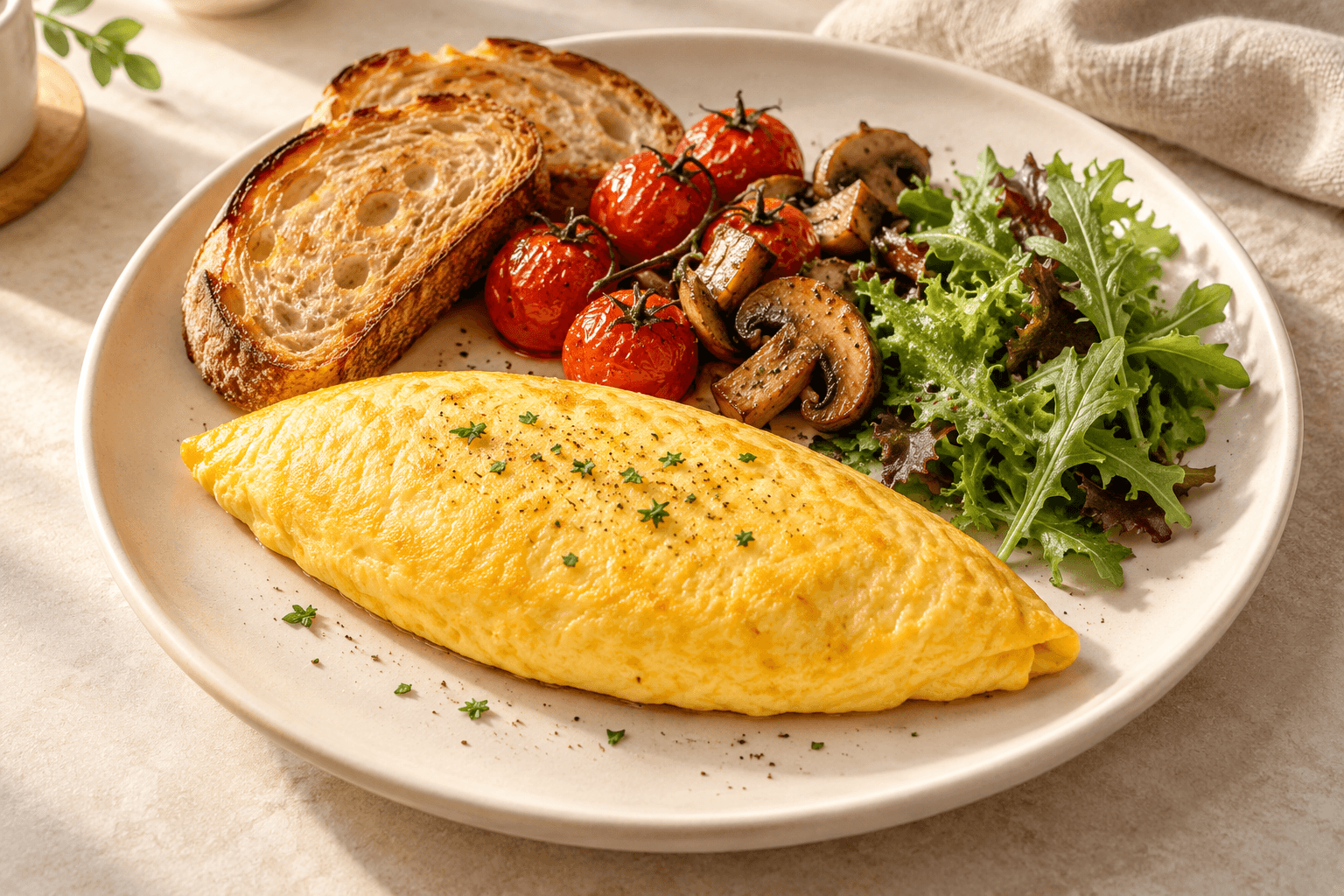
Serving idea: arrange the toast and vegetables around the omelette.
Suggested flavor: Original
Serve the omelette with toasted sourdough, roasted cherry tomatoes, sautéed mushrooms, and a small green salad. The toast adds crunch, while the vegetables bring color and variety to the plate.
Place the omelette at the front of the plate, with the sides behind it. For hotel breakfast service, set a consistent portion for the bread, vegetables, and egg.
Kitchen tip: Test the complete dish during a simulated breakfast rush. Check serving temperature, assembly time, and whether the toast stays crisp.
2. Cheese Omelette with Herbed Potatoes

Serving idea: pair roasted potatoes with tomato relish for contrast.
Suggested flavor: Cheese
Combine a cheese omelette with roasted potato wedges, chopped parsley, and a tomato side. Serve a small portion of tomato relish separately so guests can choose how much to add.
Consider this combination for breakfast or brunch.
Kitchen tip: Taste the omelette, seasoned potatoes, and relish together before adding extra cheese or salt.
3. Mushroom Omelette with Spinach and Toast
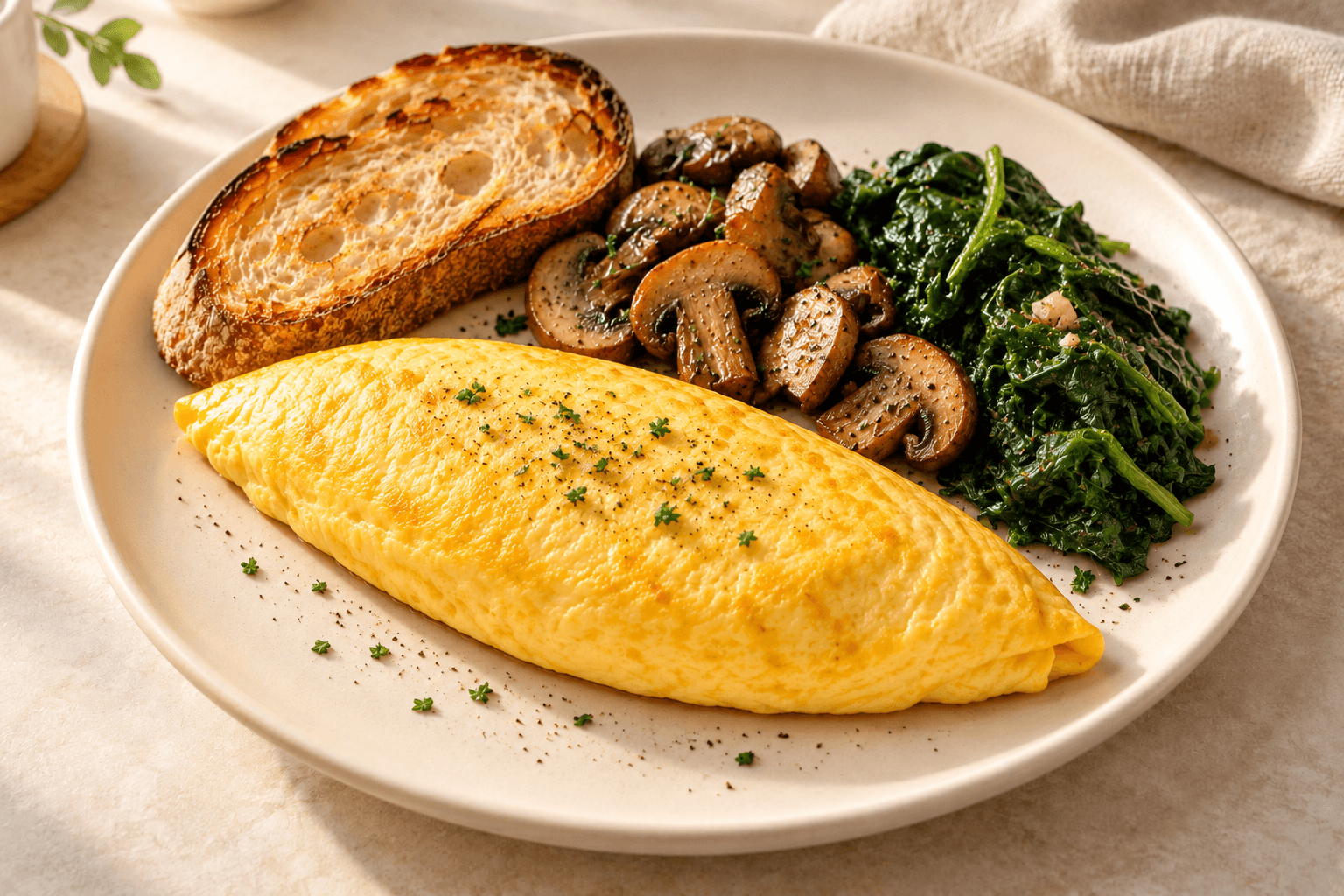
Serving idea: drain the spinach before plating to keep the toast crisp.
Suggested flavor: Mushroom
Pair a mushroom omelette with sautéed spinach, browned sliced mushrooms, and toasted bread. Arrange the vegetables alongside the omelette rather than underneath the toast.
For a light lunch, swap the toast for a grain side and serve dressing separately.
Kitchen tip: Before describing the dish as vegetarian, check the omelette ingredients, cooking fats, sauces, and sides.
4. Chicken Ham Omelette Breakfast Bowl

Serving idea: choose a bowl that comfortably fits the omelette and its sides.
Suggested flavor: Chicken Ham
Build the bowl with roasted potato cubes, cherry tomatoes, and chopped herbs, then place the chicken ham omelette on top. Offer sauce on the side.
For a lunch version, try a rice base and cooked vegetables instead of potatoes.
Kitchen tip: Test the dish in the bowl or takeaway container you plan to use. Check fit, condensation, and presentation before adding it to the menu.
5. Omelette over Tomato Rice

Serving idea: add sauce beside the egg to keep the golden omelette visible.
Suggested flavor: Original or Cheese
Place an omelette over a small serving of tomato-seasoned rice. Finish with chopped herbs and a spoonful of tomato sauce alongside the rice.
Describe the dish clearly on the menu as “omelette over tomato rice.” Its tender, non-runny center gives a different presentation from the flowing-center omelette used in cut-open omurice.
Kitchen tip: Use a measured portion of sauce so it complements the egg without covering it.
Hotel Breakfast Service: A Menu Trial Checklist
Once you’ve chosen a combination, check how it performs in your kitchen. Test the complete dish with your service plates or bowls, kitchen equipment, and expected breakfast-rush workflow.
Define the finished portion. Record the omelette quantity and weights of bread, vegetables, potatoes or rice, and sauce. Jinyi Food’s published 140 g/bag specification describes packaging; verify the serving quantity rather than treating it as a complete meal portion.
Validate preparation and service. Follow the product’s refrigerated-thawing and reheating instructions. Record equipment settings, batch size, measured temperatures, assembly time, and any holding conditions required by your local food-safety plan.
Check quality at the point of service. Assess the egg’s texture, toast crispness, vegetable moisture, and sauce coverage after the expected service delay. For takeaway, check condensation and fit in the actual container.
Verify menu declarations. Obtain the selected flavor’s ingredient and allergen specification. Review every accompaniment and cross-contact risk before making vegetarian, allergen-free, or other dietary claims.
Calculate cost per served dish. Add the omelette, sides, sauces, allocated labor, storage and energy costs, and waste observed during the trial. Compare fresh and frozen formats on this basis instead of assuming a percentage saving.
Which Omelette Format Fits Your Kitchen?
Freshly cooked omelettes let the kitchen adjust fillings for individual guests. With prepared frozen omelettes, the service team focuses on reheating, sides, and plating.
Use the checklist above to compare the two formats. Assess texture, portion size, assembly time, and total cost per served dish, including sides, labor, storage, and waste recorded during the trial.
Jinyi Food Omelette: Product Details
Jinyi Food’s frozen omelette has a golden, spindle-shaped exterior and a tender, non-runny interior.
Product detail | Published specification |
|---|---|
Pack size | 140 g/bag |
Available flavors | Original, Cheese, Mushroom, Chicken Ham |
Custom flavors | Available for discussion |
Storage | Frozen at −18°C or below |
Shelf life | 12 months |
Preparation | Thaw under refrigeration, then reheat; follow packaging instructions |
These manufacturer-provided specifications were checked on October 13, 2026; they are not independent test results. Before a menu launch, confirm the selected flavor’s current ingredients, allergens, and preparation instructions. The product label and current specification take precedence.
Food Safety and Sources
For general egg-handling advice, see the U.S. Food and Drug Administration’s What You Need to Know About Egg Safety (updated March 5, 2024). It covers refrigeration, hygiene, thorough cooking, and temperature control during service. This U.S. consumer guidance is not a validated reheating schedule for Jinyi Food’s frozen omelette. Commercial kitchens must also follow applicable local rules, their food-safety plan, and the product instructions.
Product source: Jinyi Food Omelette specifications. For manufacturer background and published quality documentation, visit our About and Certifications pages. When purchasing, request current documents covering the relevant production site, product, and destination market. A general company claim does not establish product-specific certification.
Frequently Asked Questions
What goes well with an omelette?
Toast, potatoes, cooked vegetables, salad, and rice are useful starting points. Match the sides to the omelette’s flavor and the meal occasion.
Does Jinyi Food’s omelette have a runny center?
No. The product page describes a tender, non-runny interior. Menu images and descriptions should reflect that texture.
Can this omelette be reheated directly from frozen?
The current instructions specify thawing under refrigeration before reheating. Follow the instructions on the product packaging rather than a generic reheating time.
Can I request a custom omelette flavor?
Yes. The product page lists custom flavor options. Share your target flavor profile and intended application with the Jinyi Food team.
Can frozen omelettes be used for a hotel breakfast buffet?
They can be considered if the product’s preparation instructions and your local food-safety requirements can be met. Trial reheating, batch size, holding conditions, and texture with your actual buffet equipment. Do not assume a universal holding time or labor saving without a kitchen trial.
Which allergens should be checked before serving an omelette dish?
Egg is an allergen in an omelette dish. Check the selected flavor’s full ingredient and allergen specification, plus the bread, cheese, sauces, and other sides. Milk and wheat may be present in these accompaniments. Manage cross-contact and base menu declarations on the finished dish, not just the omelette flavor name.
Discuss an Omelette for Your Menu
Explore Jinyi Food’s omelette range for product details and bulk supply inquiries. Share your destination country, preferred flavor, estimated order volume, and menu application so the team can discuss a suitable option.
